Smart & Sustainable, Green Garden Design, Coaching & Seasonal Maintenance


Showing posts with label plant profile. Show all posts

Wednesday, October 06, 2010

Plant Profile: Tulbaghia violacea, Society Garlic

Tulbaghia violocea, a Flickr photo by IngaMun

A South African native, society garlic is a garden trooper! You probably won't find it on many lists of favorite plants, and yet it looks good and flowers for an incredibly long time! It does have a smell of onion or garlic, but that doesn't deter me from admiring this easy plant. It looks fine without maintenance (deadheading spent flowers) from a distance, but will look fresher up close and produce more new flowering shoots with a wee bit of TLC.
Dense clumps of straight, narrow, evergreen leaves send up slim, 1 - 2 ft. stems  topped by clusters of small, trumpet-shaped, pinkish lavender flowers Suffer frost damage at 20 - 25 degrees F, but recover quickly. Start plants from containers or divisions at any time (though early spring or early fall is best in hot-summer areas). (Sunset Western Garden)
While the flowers are the same color, its evergreen leaves are available in a few different colors, the main one being green, my favorite being, 'Variagata', which has a white stripe down its middle.


One of my favorite uses of society garlic is in a big planting, like in this garden at the Getty Center in August,
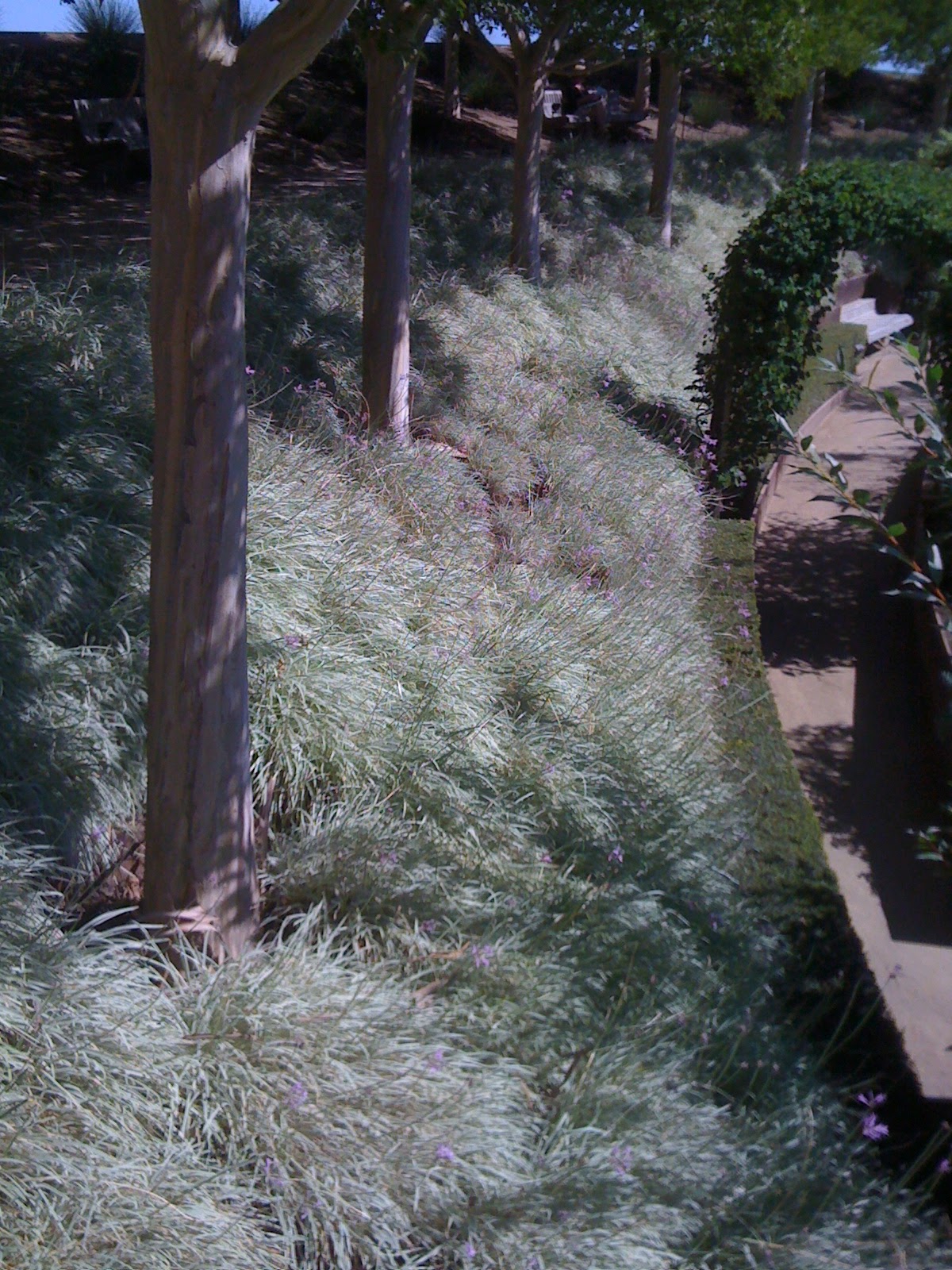
Tulbaghia violacea, 'Silver Lace'


or, this bed with the cool sculpture at the Rancho La Puerta in September
Tulbaghia violcea, the green one


society garlic clipped to ground in the winter
A buzz cut in the winter keeps this Starbuck's bed of society garlic and fortnight lily behaving (mostly for the benefit of the fortnight lily, which can get downright ratty if allowed to run rampant!) ...


the border rebounds!
... and, here they are at the end of June.


Try this in your garden and I think you'll find your thumb feeling a bit greener!


Whether you need garden design, coaching, seasonal maintenance or planting, Geno's Garden can help!
Call me at (916) 764-5243, or email hansonja@aol.com.

Saturday, July 10, 2010

Plant I.D. Nerium Oleander

Nerium oleander - Oleander
(Plant Profile Saturday)
an oleander hedge
Oleander is a native Mediterranean shrub that grows ubiquitously here in Sacramento, especially on freeways and median strips. Here are some of its characteristics:

Size: This is a large evergreen shrub. The species grows rapidly, 4 - 6"/year, until it reaches a height of 18 - 20' and a width of 12 - 15'. There are cultivars, such as Petite Pink, that are much smaller, with a height of 3 - 6'.

strip mall oleander

Pruning: Because it is so tolerant of pruning, it is frequently seem as a 6' hedge, a lollypop, or a multi-stemmed tree. It may be too top-heavy until its trunk has some girth, so will require some staking. If it has become ugly or too leggy, it can be cut to the ground before new growth in the spring and it will come back. If it is "skirted up" to create a tree form, it will continue to produce basal growth, so you will need to continue that pruning or you could wind up with an oleander bustle at its base.

oleander bustle

Poisonous: yes, all parts if eaten. Can cause severe irritation if its smoke is inhaled, so don't burn trimings.

Care: Oleanders like regular water, but are drought tolerant ... can take sun or shade, acidic to alkaline soils. In other words, everything!

Propagation: by seed.

Leaf & Flower: long narrow leaves are 5 - 10", 3 leaves at each node. Red, white and pink flowers bloom from spring to fall (newer cultivars provide additional colors).

The GF (Green Factor): most commonly, "right plant for the right place" is violated with this shrub due to the extra pruning, extra green waste, and, yes, extra work! It is a useful landscape shrub and can provide great background color, but the ultimate size should be considered before planting.


Whether you need garden design, coaching, seasonal maintenance or planting, Geno's Garden can help! Call me at (916) 764-5243, or email hansonja@aol.com.

Friday, December 04, 2009

Plant Profile: Euphorbia pulcherrima, Poinsettia

my poinsettia
Euphorbia pulcherrima (pulcherrima meaning pretty) is native to the tropical areas of Mexico and Central America, where they grow without care, even reaching roof height! In our climate (Sacramento), the freezes turn them to mush, so they never really get the chance to grow that tall. It takes some cunning and work to keep them alive, but it is not impossible. Essentially, like other frost-tender perennials, you need to protect them from those low temperatures ... by bringing them indoors, or by creating an outdoor frost-protected area until the last frost for your area. When they finally drop their leaves, cut stems back to 2 buds and reduce water. They will soon start putting out new growth, preparing for their next blooming season, which is late winter to early spring (late January thru March). Breeders force them into an earlier bloom in December by jump starting winter and you can try it, too. In early Oct, get those faux, long-night winter nights started. Confine your poinsettia to a darkened space, like a dark closet, in the evening for 14 hours, then bring into the light for 10 hours. Do this for 10 weeks.

Since your outdoor poinsettias will probably be too large by next December, you may want to propagate new plants by making late-summer cuttings of stems with 4 - 5 eyes (joints). Then, start your winter! (See what I mean about the cunning and work?)

Here's an interesting video about the creation of a huge Poinsettia ball, from the Chicago Botanic Garden's Wonderland Express...


At this point, this is all book-learning to me. Must admit, I've never done it. But, I do have my little poinsettia pictured at the top, and I'm going to give it a go this year. How 'bout you? I've just given a brief outline of the procedure...read more in the two great references I used, Sunset Western Garden Book, and the horticultural website, Floridata.


Whether you need garden design, coaching, seasonal maintenance or planting, Geno's Garden can help! Call me at (916) 764-5243, or email hansonja@aol.com. For more information on our services, click here.